|
aquarian weeklyAugust 30, 1995 World Beat
 19903 THE
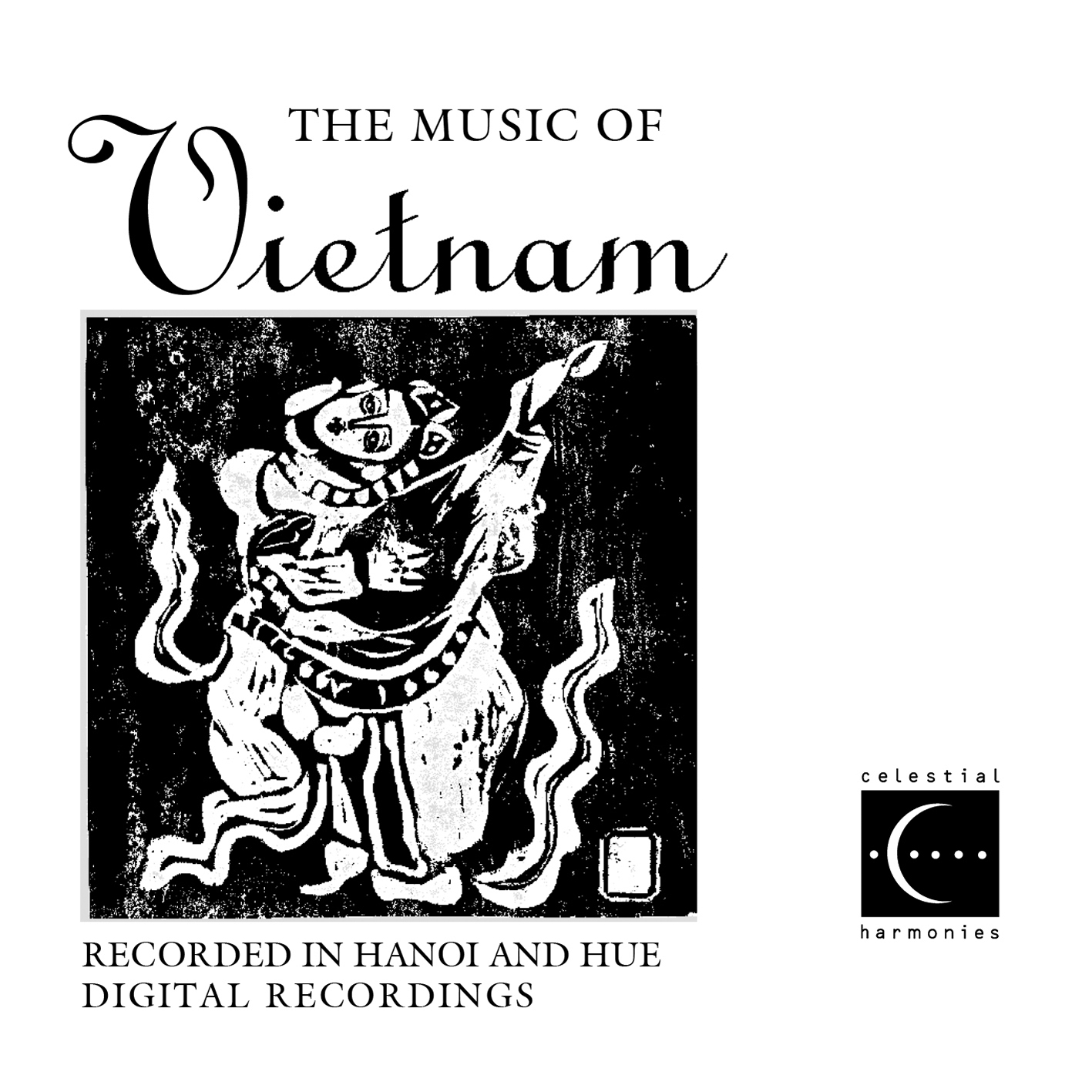
MUSIC OF VIETNAM (3 CD BOXED SET) -
19903 THE
MUSIC OF VIETNAM (3 CD BOXED SET) -Vietnam has the dubious distinction of being one of the most misunderstood countries in the world. To many Westerners, in France and North America particularly, Vietnam is the name of a war—and very little else.That the name applies to a people and to a distinctive form of music and art, is an idea that is only now gaining acceptance, albeit slowly. That said, it's highly unlikely that even the most ardent of music lovers would associate Vietnam with its 1000–year–old single–stringed guitars, its one–holed flutes, its strange rifle–shaped fiddles—that are played with the mouth—or its percussive instruments that don't actually need to be touched! All of these are part of Vietnam's heritage, and all appear throughout the splendid three CD box set, The Music of Vietnam, on the Celestial Harmonies label. Clocking in at nigh four hours, this more than regal collection of imperative music conveys the many moods and emotions of life itself. Sometime up, sometimes down, occasionally dark, occasionally benign—and with many a sweeping time change to boot; it has to be said, that Vietnamese music is as beautiful as the country itself. It's enthralling, it's romantic, it's remote, as well as refreshing and in parts, extremely jocular. For instance, Canh Chim Bao Tin Vui (Bird Bringing Good News) needs to be heard to be both believed and fully understood. Composed by Dam–Thanh, the song features Le Tu Cuong playing an instrument called a sol—a sort of flute. With the title (almost) revealing all, the flute takes the lead role while being aided and abetted by some rather flash Harry zither playing. Halfway through, the flute reveals a surprising lower register, but then soars back to its usual semistratospheric range for a rousing finale. Moreover, it's the way it's executed and the same applies throughout. The track Don Con Xa (Religious Ritual Music) is a jumble of innovation in itself. Fast–paced and highly rhythmical, the song pits a solo moon–lute against both metal and wood percussion—delving the listener into areas not usually associated with normality, let alone expectation! In other words, it's colorful, it's dangerous, it's volatile, and it's the sort of thing Tom Waits would fall over backwards for. And talking of whom, Tieng Khen Goi Ban (Calling Sounds of the Khen Pipe) is pure Waitsian circa Swordfishtrombones. Once again, featuring Cuong on another flute sounding instrument called a lem kep, the song sounds like Manhattan during rush hour during a mid–August heatwave. It's noisy, it's esoteric, and it involves Cuong venturing into the uppermost register of his instrument via a collection of sax sounding (I kid thee not) multiphonics (several notes being played simultaneously). Talk about the chimes of freedom confronting the car horns of madness... At the end of the day, it'd be mighty easy to praise this collection beyond all plausibility—but due to space restriction and a looming deadline, it isn't possible. Apart from which, I'd like to leave the final word to former U.S. Secretary of State, Robert McNamara, who, due to having recently released his memoirs, In Retrospect, also broke three decades of silence on this subject by saying: "We were wrong. And we owe it to future generations to explain why."
|
 |