songlines
Spring/Summer 2001 (.pdf)
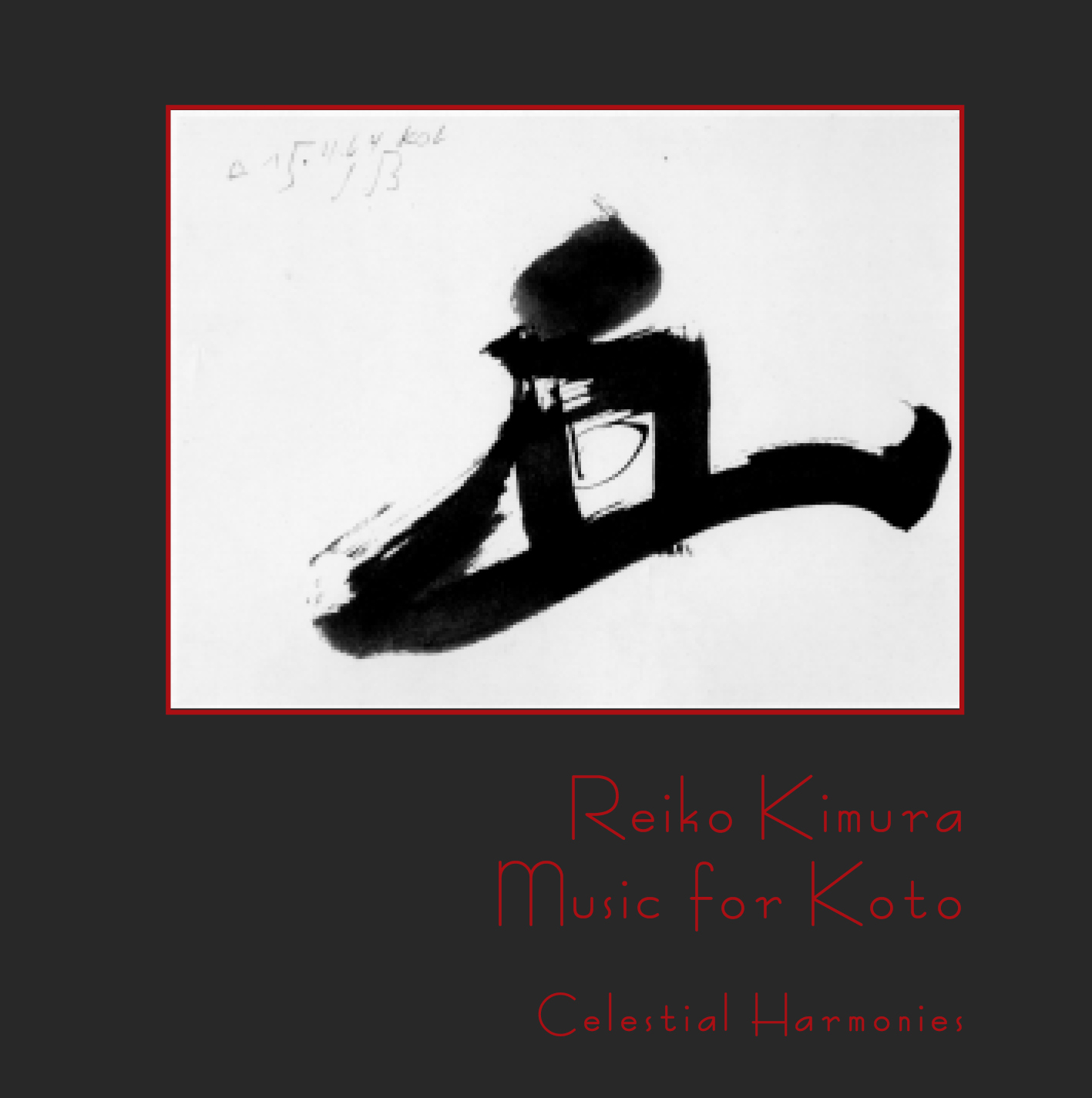
 13191 MUSIC FOR KOTO - REIKO
KIMURA
13191 MUSIC FOR KOTO - REIKO
KIMURA
This beautifully presented and produced album features five extended
pieces from the gendai hogaku koto repertoire, or contemporary
music for Japan's traditional instruments. But in order to situate the
listener in the historical development of the instrument (and this album
does not cover the koto as an accompanying instrument to vocal
music), Reiko Kimura included as the opening track a 17th century classic
Midari, which she plays with stunning technique and great gusto.
The other tracks are all by contemporary Japanese composers like Matsumura
Teizo and Miki Minori.. Teizo was one of the pioneers of extending the
koto's repertoire by adding extra strings, which started in the
late 1920s. His Ichiban also features the haunting sound of the
bamboo shakuhachi flute to stunning effect.
Even though I lived in Japan I was not aware just how far contemporary
koto composition has gone in the last 80 years, in complete contrast
to many other Asian countries where the zither is played. Minoru's
Rhapsody for twenty-stringed koto solo is an example of the more
modernist approach, where composer uses a series of thematic transformations
in different rhythms, but still retains a classical atmosphere. Kimura's
playing is spectacular on this piece, as she showcases the richness
of the expression of the koto—sometimes sounding like Toumani Diabate's
kora and sometimes like a dulcimer.
In the liner notes Kimura says that she wants to present an album that
offers a "broad understanding of the music of the koto".
She has certainly done that—and much more. Highly recommended.
January 1999
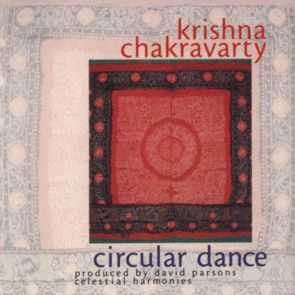
13133 CIRCULAR DANCE
- KRISHNA CHAKRAVARTY
Although there are a few famous Indian sitar players who are
known in the West, there are many more excellent ones that are rarely
heard here. One such player is Krishna Chakravarty, so her new album
is welcome. Chakravarty is a pupil of Ravi Shankar and many aspects
of her playing reflect those of her guru, but she also has her
own individual musical voice, which is heard here in three pieces: Raga
Hemant, Raga Lalit and a dhun (folk melody) in Raga
Bhairavi. Her playing is always focused and direct, although it
occasionally lacks lyrical contrast. She is particularly impressive
in fast, rhythmic sections. For example, in the jor section of
Raga Hemant she executes a series of gamak tans (fast
series of notes which include meend—the lateral deflection
of the string) with astonishing speed and accuracy. Similarly in the
gat sections, when accompanied by Vinod Gangadhar Lele on tabla,
she displays the tight rhythmic control which is a hallmark of her teacher's
playing.
For me, the dhun in Raga Bhairavi is the real revelation
in this disc. Bhairavi is one of the most popular ragas
in North Indian classical music and is often played to bring concerts
to a close. Chakravarty brings new light to bear on this ancient and
venerable raga. Her short alap is mysterious and beautiful,
exploring some unusual melodic pathways yet retaining the traditional
shape of the raga.
The sound quality is outstanding and the inert–notes helpful and
informative.
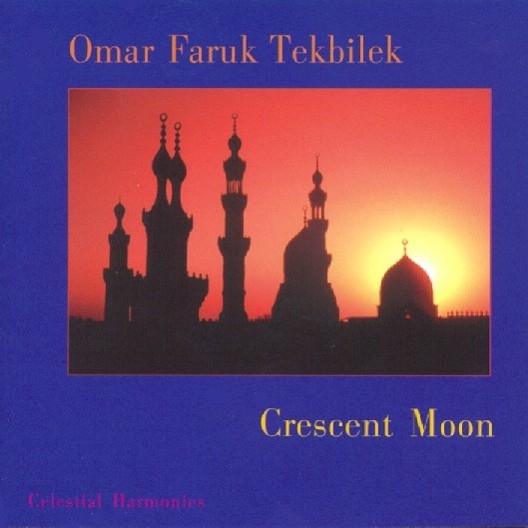
13176 CRESCENT MOON
- OMAR FARUK TEKBILEK
According to its press release, this is an album which "evokes
the ecstatic trance of the Sufi dervishes, the biting winds of the
desert at night, the rich and exotic scents of an Oriental market,
and yet it does so without clearly staying in one musical tradition".
This sounded ominously like it was going to be one of those bland
mishmashes you can find in bucket loads in New Age stores under the
label "New World Music": vaguely exotic, unthreatening music
for stressed–out management consultant types to relax to.
Undoubtedly this CD will appeal to that market, but it's more than
just bland mood music. Omar Faruk Tekbilek is a brilliant player of
the ney (the Oriental flute which is a sacred instrument for
the Sufis) and effective performer of the baglama lute. The
synthesiser–playing is relatively subtle, consisting mainly of
assorted drones.
Tekbilek is Turkish but has lived in New York for 20 years, performing
with the likes of jazz great Don Cherry and pianist Michael Harrison
whose band, Mandala Jones, specializes in interpreting the great Sufi
poet and mystic, Rumi. Most of the tracks on the present disc are
instrumental; when vocals are introduced they tend to be mixed to
sound more like instruments than lead vocals. Many of the items include
lively, near–Eastern acoustic drumming, motoring them along at
an enjoyable leisurely speed. Several, including the opening title–track,
do carry a genuine hint of the Sufi longing for the divine, particularly
the last track, Yunus, the only real vocal work–out, which
mixes in elements of the Sufi sacred zikr ceremony. The influences
jump around fairly startlingly—from Azerbaijani folk–song
to Arabic belly–dance music, via Greek, Indian and Turkish film
scores, but the production is glossy enough so that you don't see
the joins. (Last Moments of Love has a gorgeous melody.)
|