soundscapes: australia's international review of fine
music
August/September 1997
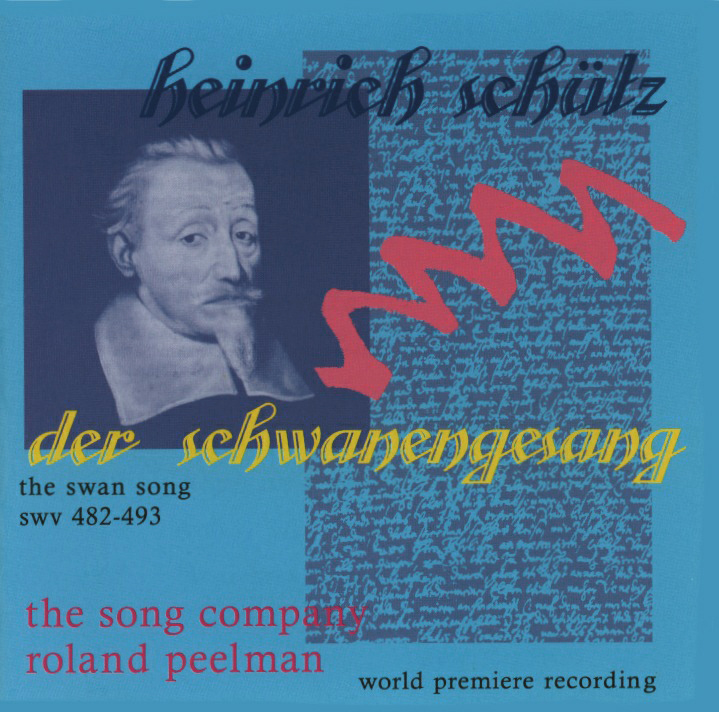
 13139 HEINRICH SCHÜTZ DER SCHWANENGESANG
(THE SWAN-SONG) - THE SONG COMPANY, ROLAND PEELMAN
- DIRECTOR
13139 HEINRICH SCHÜTZ DER SCHWANENGESANG
(THE SWAN-SONG) - THE SONG COMPANY, ROLAND PEELMAN
- DIRECTOR
Australian producer, composer, and highly acclaimed percussionist Michael
Askill takes credit for producing a superb new sacred choral recording
on the Celestial Harmonies label, performed by The Song Company and
recorded at the Sydney Opera House.
The Song Company, under the artistic direction of Belgian conductor
Roland Peelman, consists of several of Australia's most exciting voices.
Established in 1984 by Charles Colman, the ensemble has already earned
itself an enviable reputation as Australia's premier vocal ensemble.
Its repertoire covers the whole range of vocal music from the 12th century
to the present day, including many contemporary compositions by Australian
composers.
The Song Company performs two parts of the Trilogy The Swan Song—Psalm
119 and Psalm 100—on this recording sung in German,
the language in which it was originally written.
Der Schwanengesang (The Swansong) is probably the last work
of German composer Heinrich Schütz (1585–1672) who was born
exactly 100 years before J.S. Bach. The young Heinrich showed great
musical promise but studied law in Marburg to please his parents. In
1609, Schütz made the first of three visits to Italy to study with
the great Giovanni Gabrieli—and ultimately to change his life,
and along with it the face of German music by successfully uniting or
fusing, to use contemporary language, the light, decorative Italian
style with German mysticism.
At the end of a full life predominantly devoted to composing sacred
and church music, Schütz composed a testimony of sorts to everything
he believed in as a musician—a cycle of motets for eight voices
in two antiphonal choirs accompanied by organ basso continuo.
His choice of text was equally telling: Psalm 119, the longest psalm
in the psalter which, according to Martin Luther is no less than "a
small Bible...an elegant handbook within the Bible as a whole".
To complete his Swansong, Schütz chose his 1662 setting
of Psalm 100, naturally a more overtly exuberant and ceremonial work
with continuous contrapuntal activity between the individual voices.
April/May 1997
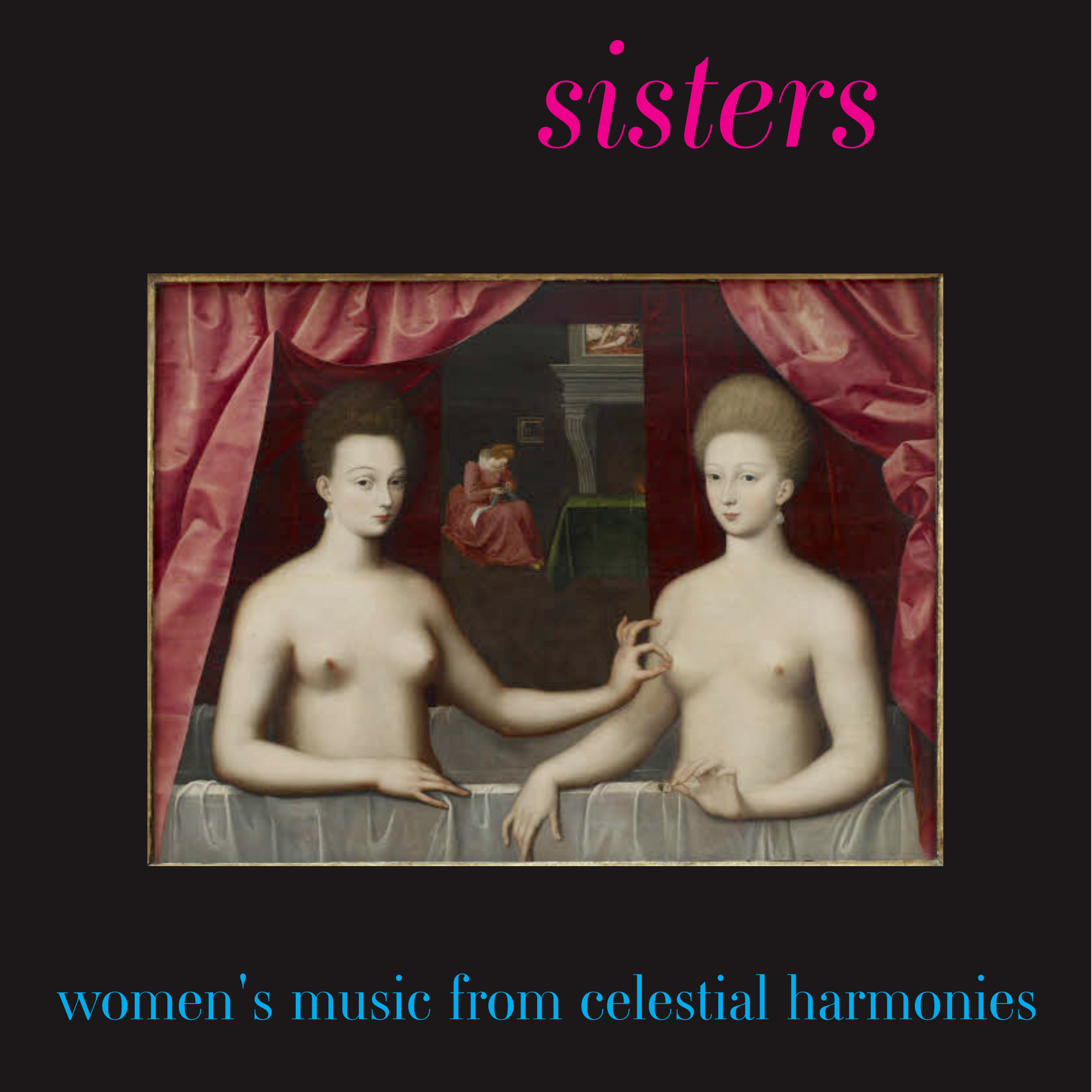
13131 SISTERS: WOMEN'S MUSIC
FROM CELESTIAL HARMONIES - VARIOUS ARTISTS
Sisters is a collection of women's music from the Celestial
Harmonies label which surveys an enormous range of music from the medieval
songs of Hildegard of Bingen played by Stevie Wishart and Sinfonye or
Therese Schroeder-Sheker to the traditional music of India played on
the sitar by Krishna Chakravarty, the Japanese koto of Satsuki Odamura
and on to the contemporary violin playing of Australian Claes Pearce.
The overall effect of combining such a diverse range of musical styles
and instruments at fairly subdued tempos makes this an ideal way to
explore unusual or undiscovered music on a recording which has, by reason
of its programming, a very relaxing effect.
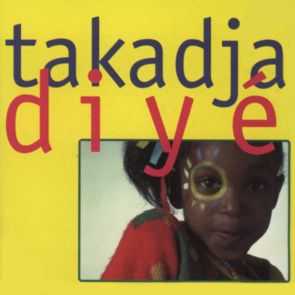
15025
DIYÉ - TAKADJA
The progressive influences of African music is admirably demonstrated
on the second Celestial Harmonies CD by the Canadian group Takadja,
Diyé. This a joyous celebratory CD dedicated to children
everywhere featuring traditional rhythms from different parts of the
Africa on songs and instrumentals written by members of the group.
Apart from many percussion instruments used there are also bright
melodic flourishes on traditional flutes, the African lute harp, the
kora and the marimba–like balafon
August/September 1996
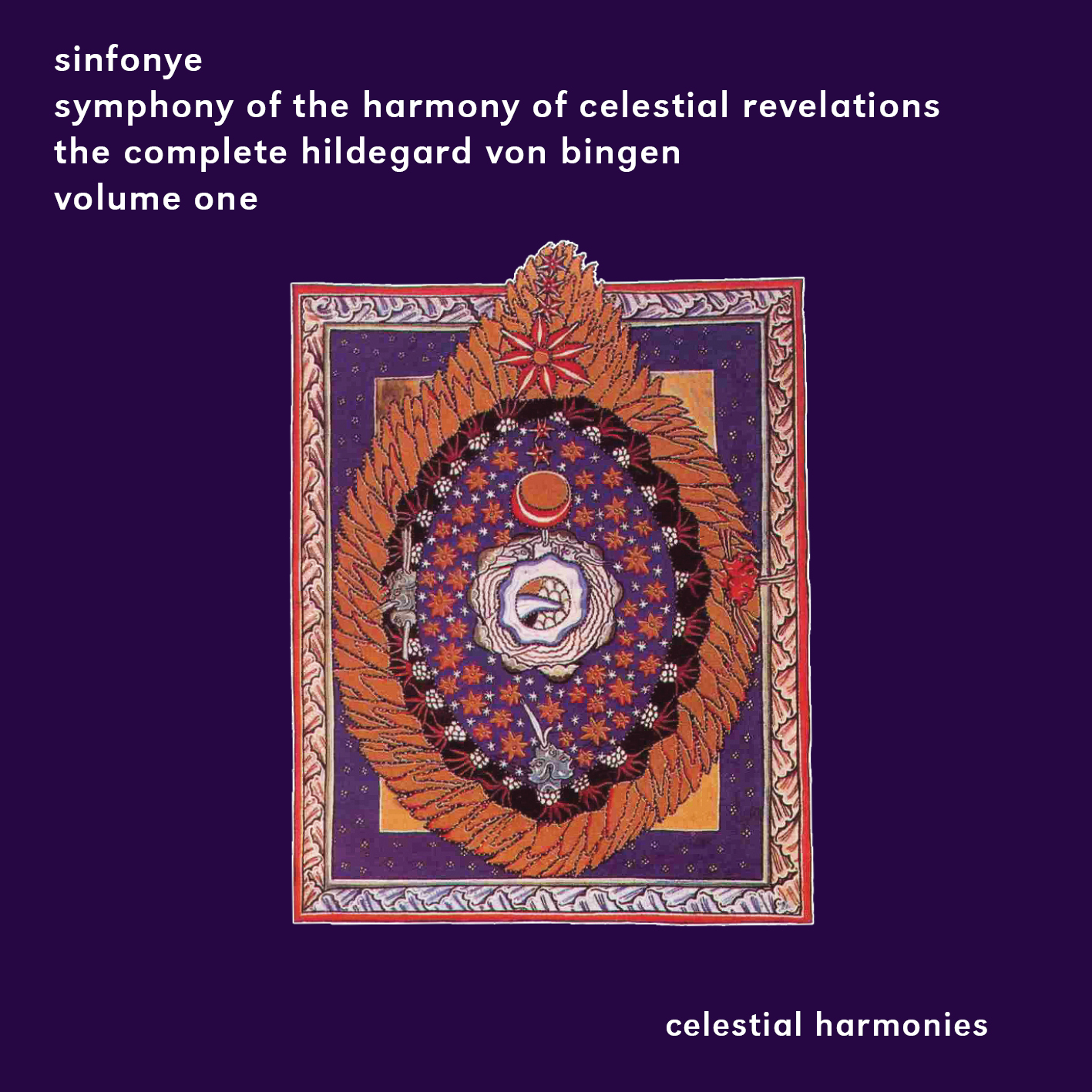
13127
SYMPHONY OF THE HARMONY OF CELESTIAL REVELATIONS: THE COMPLETE
HILDEGARD VON BINGEN, VOLUME ONE - SINFONYE
This Hildegard piece was initially intended, and finished, for an
earlier issue of Soundscapes. But at exactly the time that
the editor was finalising content for that issue, a press release
turned up announcing the imminent arrival of a significant new player
in the Hildegard market. volume one of the complete hildegard von
bingen by sinfonye on the celestial harmonies label (this label is
right–on, and doesn't go in for capital letters) has now arrived;
it looks and sounds very good, and approaches the repertoire in sufficiently
different ways to provide rich and worthy competition to Sequentia's
series.
Stevie Wishart divides her time, enviably between Sydney and Oxford.
Shortly after I spoke to her she was off to the UK for six months
or so, initially to give an innovative, audio–visual Hildegard
performance in London similar to the one Sinfonye gave in the 1994
Adelaide Festival. She's understandably excited about this release,
her first for the Arizona–based , eclectic, slightly new–agey
label celestial harmonies. Picking up a contract for a complete Hildegard
project must be truly a gift from on high? "Yes, I'm obviously
very pleased about it. It's a great contract, and gives us a lot of
flexibility and control." Wishart is very hands–on with
her recordings. She produces them, and has strong views on design
and textual content. Her present approach is minimalist, and so in
this Hildegard release, there are full texts and translations, but
no lengthy erudite notes—just a quote from Hildegard and a short
note from Wishart indicating the group's performance aesthetic.
Revealingly, the Hildegard quote contains the following: "I
also brought forth songs with their melody...I sang them too, even
though I had never learned either musical notation or any kind of
singing." Wishart aims to recapture the same spontaneous feeling
in Sinfonye's performances: "working as much as possible within
aural processes of learning by rote, I hope for a communal sense of
metrical direction while leaving space for the spontaneity of vocal
ornamentation and improvised organum." In addiction to the core
trio of Sinfonye—Wishart, Jocelyn West and Vivien Ellis—this
Hildegard release features Welsh folk–singer Julie Murphy and
five members of the Oxford Girls' Choir. In this sense, using young
women and working less from the printed page and more aurally, it's
arguable that this is a pretty authentic Hildegard—what you'd
have got in the Bingen nunnery.
Other interpretative aims, Wishart tells me, are that "there's
a sense of urgency, a moving through the phrase", that "we're
not looking for a completely click–tight ensemble", and
that there's "a lot of personality". She consequently likes
to concentrate on chest voice production rather than head—in
order particularly to transmit text more clearly—and this is
certainly evident in the low–placed, dark and alluring contributions
from Murphy and Ellis. But how about Hildegard's stratospheric writing?
"Well, you just have to work really hard on the texts, and let
the head voice do its work." I'm certainly very impressed with
this higher singing, carried mostly by the Oxford girls and Jocelyn
West. It's in tune, better blended than the other richer, beefier
Sequentia ensemble, and has just that small element of fright and
tension which makes high notes worth listening to. Track 4, O vos
angeli, with a range of two and a half octaves is their biggest
challenge, and it comes off very well. There are many other fine moments,
and my favourite track is the last, a Song to Ecclesia, where
Vivien Ellis's warm, detailed, committed, really attractive solo rounds
the album off in an interesting and affirmative way.
|