 13221 FRANZ
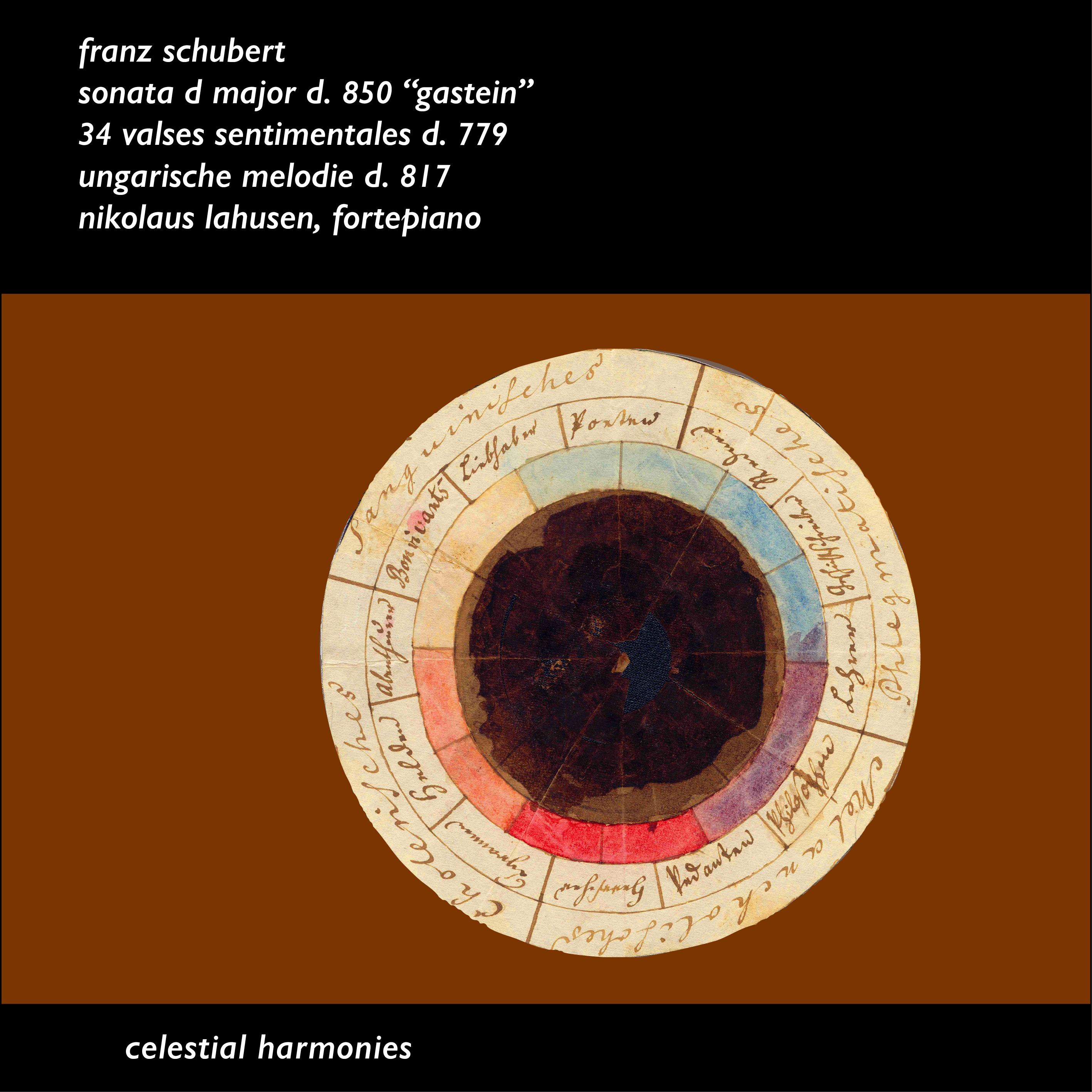
SCHUBERT: SONATA D MAJOR D 850 "GASTEIN"/34 VALSES
SENTIMENTALES D 779 - NIKOLAUS LAHUSEN (.pdf)
13221 FRANZ
SCHUBERT: SONATA D MAJOR D 850 "GASTEIN"/34 VALSES
SENTIMENTALES D 779 - NIKOLAUS LAHUSEN (.pdf)
Performing on fortepiano, Nikolaus Lahusen is the featured artist
on this Celestial Harmonies release of these popular Schubert keyboard
works.
It is obvious that Lahusen in passionate about Schubert's music—his
interpretations of these works is masterful and in his own words,
this sonata "...has fascinated and engaged me since my youth."
A sonata lives or dies by the tension it creates and the resolution
of that tension. But it takes an informed and skilled performer to
create the means to interpret and understand the composer's wishes
and maintain that fine balance. Lahusen handles this technically difficult
sonata with apparent ease, imbibing the four contrasting movements
with all the fine stylistic and rhythmic nuances, the subtle phrasing,
the addition of light and shade which are necessary to bring Schubert's
ideas to fruition. Written in 1825 the sonata reveals much about Schubert's
compositional processes and Lahusen's interpretation reveals a wonderful
insight into that process.
As Mozart was a composer of opera, so Schubert was a composer of
song. The diversity of his melodic ideas is strongly evident in the
34 charming waltzes that comprise the D779 Valses sentimentales
collection. Lahusen is sensitive to the changing character of each
piece, bringing out the innate colours and subtle shadings of the
music. From the shortest piece—just 34 seconds, to the longest
of 1'24"—the waltzes contain a wealth of melodic ideas,
ever-prevalent in this most melodic of composers and faithfully reproduced
by the performer.
The last work performed on this CD, the Hungarian Melody (Ungarische
Melodie) was written by Schubert in 1824, becoming popular later
as the four-handed piano work D818. Lahusen's commending interpretation
of the work reaches into the inner world of Hungarian bitter-sweet
sound scapes; aided by Schubert's simply yet meaningful music his
is a wonderful rendition of the composer's intention.
Lahusen is a virtuoso performer and I thoroughly enjoyed this recording.
I can confidently recommend it to teachers and students alike who
will find it a valuable tool to understanding the character and interpretation
of these important Schubert works. Released on the Celestial Harmonies
label, No. 13221-2 and available at good music stores.
November 2001
13091 OF
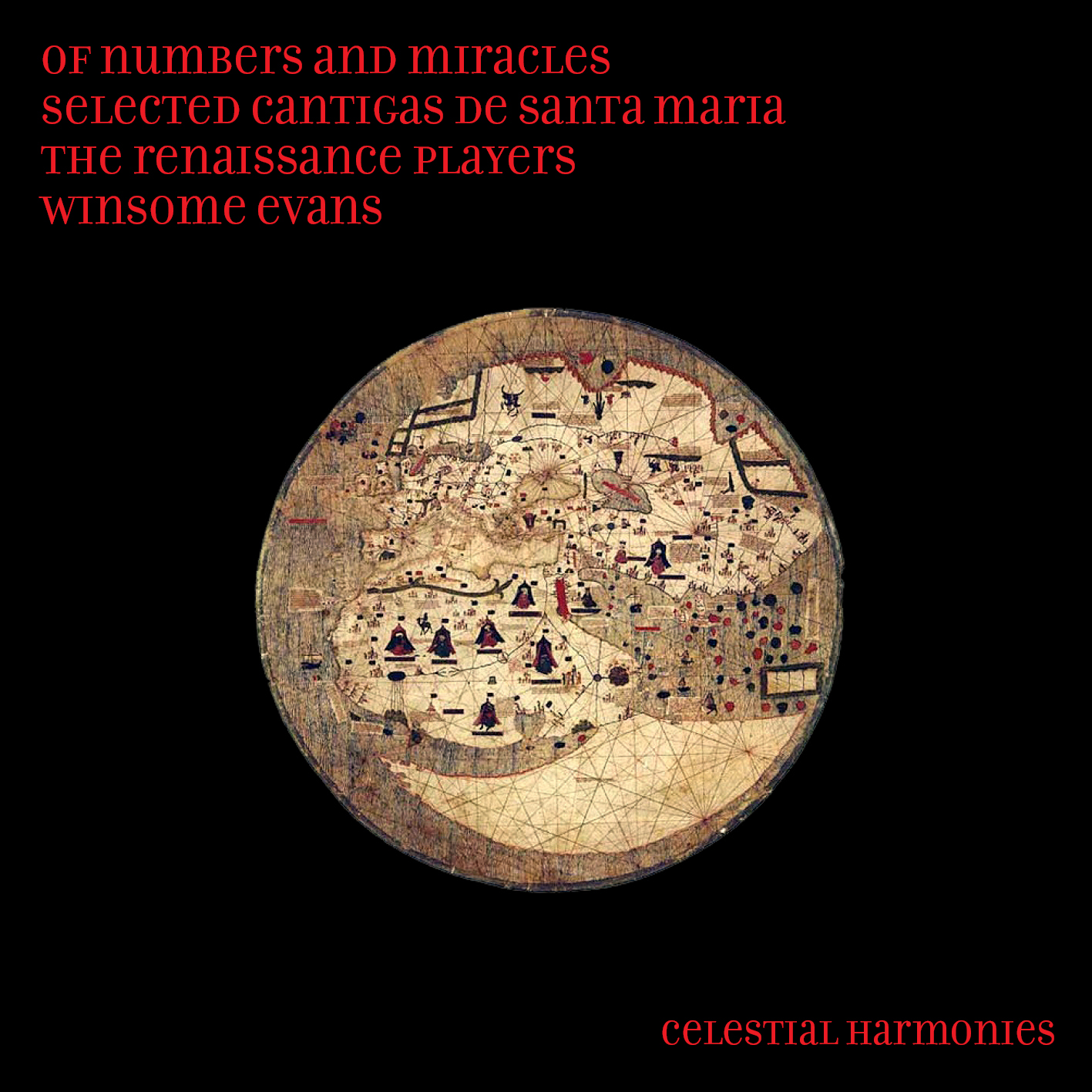
NUMBERS AND MIRACLES: SELECTED CANTIGAS DE SANTA MARIA - WINSOME
EVANS AND THE RENAISSANCE PLAYERS
Fourteen tracks of a richly–woven tapestry of instrumental and
vocal works heralds the extraordinary talents of the Renaissance
Players led by their Director, Winsome
Evans. These flawless performances of Evans' arrangements of 13th
century secular songs in praise of the Virgin Mary are a delight to
listen to and give a wonderful insight into the exotic musical multiculturalism
of the then inhabitants of the Iberian Peninsula.
There is a surprising contrast in the material of the songs; although
all have the common theme of Mary, they range from rollicking, folk–like
virelai forms such as O que pola Virgen lexia and O nome
da Virgen Santa to works featuring large instrumental ensembles
such as Da que Deus mamou or smaller, illustrative combinations
as found in A madre do que a bestia; or yet again, the dance–like
rhythms of Santa Maria strela do dia contrast with the chant–like
refrains of Quen boa dna querra. The opening track Beeyta
es Maria is an evocative bell solo that is recalled in the last
track with its haunting bell theme supported by the clear tones of
the accompanying soprano and counter–tenor voices.
The human voices of Mara and Llew Kiek, Jenny Duck–Chong, Tobias
Cole and Mina Kanaridis are complemented by the almost–human
voices of the medieval instruments: vielle, rebec, mandora, bombarde,
gittern, pandero, shawn, the tinkle of percussion instruments and
a host of others. Hypnotic rhythmic patterns, the modal flavours of
the melodic structures often underpinned by drone basses all create
an exotic, colourful concoction of harmonious sound.
Winsome Evans' reputation as an exponent and performer of medieval
and renaissance music is well known; her interest in this particular
collection of Cantigas which was compiled by Alfonso X of Spain
is evidenced firstly by her decision to arrange the songs, and secondly,
by the scholarly research that is evidenced by her various comments
made in the liner notes which themselves, are an excellent resource
for the uninitiated. Evans makes no apology for the arrangements she
has created for this collection and indeed, no apology is needed—they
work perfectly and the performance themselves are unflawed.
This is an important collection that gives an insight into the secular
music world of the 13th century. As Winsome Evans has remarked: "The
Cantigas de Santa Maria represents the largest surviving body
of secular music from medieval Europe." Treat yourself to an
exciting experience of music that is quite out of the ordinary. I
would urge teachers to expose their students to the experience of
listening to eary music....after all, there was a lot happening—in
fact some thousands of years of music making—before 1600!
Released on the 'Celestial Harmonies' label (with a red–over–brown
cover) the recording has been produced by Winsome Evans with text
and music selection by John Schaefer.
13192 ABUNDANCE - MICHAEL
ATHERTON AND JAMES ASHLEY FRANKLIN (.pdf)
"...a reflection of many landscapes of the earth in their abundance..."
With this description Australian composers Michael
Atherton and James Franklin
explain this extraordinary compilation of the blending of sounds of
diverse cultures: Japanese, Korean, Western and Australian Aboriginal.
Indeed, the philosophy that lies behind the musical blending of the
various instruments—to participate in and internalise a musical
culture other than one's own—is very successfully achieved in
a soundscape of rare beauty that results in a wash of colour and varying
textures.
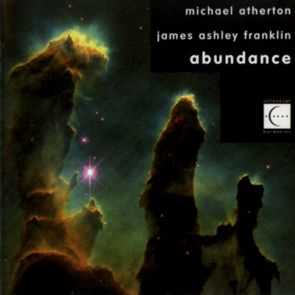
The cover picture of Eagle Nebula 16, perhaps gives the clue to the
content of this unusual recording: ethereal, unreal, timelessness
in space, endlessness, the sounds of a new world, changing horizons,
a vast soundscape that embraces a multicultural view of the shrinking
world, the global village in which we live.
The haunting Japanese shakuhachi features on every track and
it speaks with great beauty under the masterful fingers of James Franklin;
other instruments include the Egyptian harp, koto, vibraphone,
drums of various sorts, metal percussion, guitar and didgeridu,
all flawlessly played by multi–instrumentalist, Michael Atherton.
Textures vary according to the instrumental combinations: Groves
of Bronze contrasts the bamboo of the shakuhachi with the
metallic ring of percussion; in Garden Meeting the traditional
koto and the shakuhachi vie with the vibraphone and
bass drum; the solo shakuhachi work Salz is so ethereal
that at times it sounds like more than one instrument being played.
Elements of randomness (Mountain Grandeur) and improvisation
(Boreas' Journey and Rejoicing World) add more interest
and speculation to the sound colour. Whilst traditional 'forms' do
not apply to these works, they arrive at a sense of unity, a consensus
in which each is perfectly formed.
The remote areas of this country of ours are no stranger to this
reviewer and having stood more than once on the plain of Ulruru, Desert
Horizon for me, speaks of all that stark loneliness, desolation
and enormity that the great interior of this country represents. Supported
by a rhythmic ostinato, the poignancy of the didgeridu, shakuhachi,
changgo and koto come together in an amazing tone poem
in which one can visualise that vast, interior emptiness; and perhaps
too, the emptiness of a lonely soul.
This is a musical experience that should not be missed, an insight
into a world of harmony and sharing. Abundance is not just
the coming together of Eastern and Western instrumental sounds—it
is a philosophy, a statement of peace, a blending of cultural diversity
into oneness; an apt statement for today's world.